BE Chemical Engineering – Semester II
Subject: Chemistry (Code: BE01R00031)
Commencement Date: 12-01-2026 (Swami Vivekanand Jayanti)
Dear Students,
Hearty welcome to Semester II of BE Chemical Engineering and to the subject Chemistry (BE01R00031).
It is a matter of pride and inspiration that we begin this academic journey on 12th January, the birth anniversary of Swami Vivekanand Ji, whose thoughts remind us that education is the manifestation of perfection already within us. Let this auspicious day motivate us to learn with curiosity, discipline, and a scientific temper.
Chemistry forms the foundation of Chemical Engineering, helping you understand:
-
Molecular interactions and material behavior
-
Thermodynamics and reaction principles
-
Industrial and environmental applications
-
Analytical and problem-solving skills essential for engineers
This course will focus not only on theoretical understanding but also on conceptual clarity, real-life applications, and analytical thinking, which are crucial for your future academic and professional growth.
I encourage you to:
-
Attend classes regularly
-
Ask questions without hesitation
-
Relate concepts to practical and industrial scenarios
-
Learn with enthusiasm and integrity
Let us make this semester a journey of knowledge, innovation, and self-development, inspired by the ideals of Swami Vivekanand.
Wishing you all a successful, meaningful, and enlightening semester ahead.
Best wishes and warm regards,
Course Instructor
Chemistry – BE01R00031
Dr. B. R. Sudani
Faculty – Chemical Engineering Department
Government Engineering College, Valsad
📘 Course Details for Students
Subject: Chemistry
Course Code: BE01R00031
Program: BE (All Engineering Branches)
Semester: II (First Year)
Academic Year: 2025–26
Commencement Date: 12 January 2026 (on A Special Day: Swami Vivekanand Jayanti)
🎓 Course Outcomes (What you will learn)
After completing this course, you will be able to:
-
Define chemical properties of atoms, molecules, metals, alloys, and energy sources
-
Relate atomic and molecular structure with chemical reactivity
-
Solve engineering problems related to fuel, water, and corrosion
-
Compare nanomaterials, eco-friendly materials, and energy storage devices
-
Analyze material properties using instrumental techniques
📖 Learning Resources
Standard Engineering Chemistry textbooks
NPTEL and MIT OpenCourseWare lectures
Online chemistry learning platforms
Open source software and website:
|
Sr. No. |
Experiment Title |
Aim / Objective |
Video Link |
VLAB Learning Link |
|
1 |
Determination of Total
Hardness of Water by EDTA Method |
To determine total
hardness of given water sample using complexometric titration |
||
|
2 |
Determination of
Alkalinity of Water |
To estimate hydroxide,
carbonate, and bicarbonate alkalinity in water sample |
||
|
3 |
Estimation of Chloride by
Mohr’s Method |
To determine chloride
content in water using argentometric titration |
Available |
|
|
4 |
Estimation of Moisture
Content in Coal |
To determine percentage
moisture present in coal sample |
Available |
|
|
5 |
Determination of
Saponification Value of Oil |
To determine
saponification value and assess quality of oil/fat |
Available |
|
|
6 |
Determination of
Concentration using Spectrophotometer |
To estimate concentration
of unknown solution using UV-Visible spectroscopy |
Available |
|
|
7 |
Determination of Iron in
Steel Sample |
To estimate percentage of
iron in steel sample |
Available |
|
|
8 |
Determination of Corrosion
Rate by Weight Loss Method |
To study corrosion
behavior of metal in given environment |
Available |
|
|
9 |
Determination of Copper in
Brass Sample |
To estimate copper content
in brass alloy |
Available |
|
|
10 |
Determination of Rf Value
using TLC |
To separate components and
calculate Rf value using thin layer chromatography |
Available |
|
|
11 |
Analysis of Pyrolusite Ore |
To estimate MnO₂ content
in given ore sample |
Available |
|
|
12 |
Synthesis of Metal
Nanoparticles |
To synthesize metal
nanoparticles and study their properties |
Available |
Book to Learn more: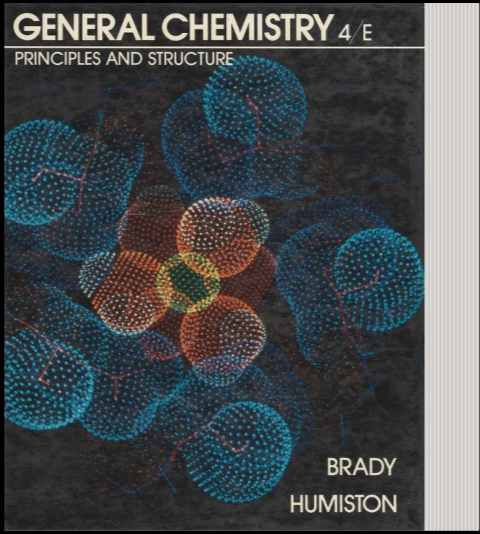
Suggested Project List minimum one project per student or group o students.
1. Construction of bio-reactor
2. Construction of Li-cell
3. Set-up for photolysis of water
4. Synthesis of bio-degradable polymers
5. Design concept based on circular economy
Any other suitable project suggested by mentor or students.


Looking for a trusted gas cylinder manufacturer in India? Get strong, safe, and high-quality cylinders for industrial and medical use with fast delivery.
ReplyDelete