CHEMISTRY (BE01R00031)
Academic Year 2026–27
Welcome to the New Semester
Commencement Date: 22 July 2026
Dear Students,
A warm welcome to Government Engineering College, Valsad and to the fascinating world of Engineering Chemistry.
I am delighted to welcome you to Chemistry (BE01R00031), a Basic Science course designed under the National Education Policy (NEP) and the GTU Curriculum. This course is intended not only to strengthen your understanding of chemistry but also to demonstrate its role in solving real engineering problems.
As we begin our Engineering Chemistry course on 22nd July 2026, it is inspiring to know that this date holds a special place in India's scientific history.
On 22 July 1981, India's first geostationary communication satellite – APPLE (Ariane Passenger Payload Experiment) became operational. This remarkable achievement by ISRO marked India's entry into advanced satellite communication technology and paved the way for modern communication, weather forecasting, telemedicine, distance education, and digital connectivity across the nation.
Years later, on 22 July 2019, ISRO launched Chandrayaan-2, India's ambitious mission to explore the Moon. Although the Vikram lander faced challenges, the orbiter continues to provide valuable scientific data, reflecting the true spirit of scientific inquiry—where every experiment, whether fully successful or not, contributes to knowledge and future achievements.
These milestones remind us that science is a journey of curiosity, experimentation, perseverance, and innovation. As we commence this course today, let us embrace the same scientific spirit—asking questions, performing experiments with sincerity, and applying chemistry to solve real-world engineering challenges.
"Every great scientific achievement begins with a curious mind and the courage to experiment."
I wish all of you a joyful, inquisitive, and successful learning journey in BE01R00031 – Chemistry.
During this semester, we will discover how chemistry contributes to building smarter, cleaner, safer, and more sustainable engineering solutions.
🎯 Course Objectives
The course aims to help students:
- Develop strong scientific fundamentals.
- Understand the chemistry behind engineering materials.
- Relate chemical principles to industrial applications.
- Build analytical and problem-solving skills.
- Perform laboratory experiments safely and accurately.
- Appreciate sustainable and green technologies.
📚 What You Will Learn
As prescribed in the latest GTU curriculum, this course includes:
- Atomic and Molecular Structure
- Spectroscopic Techniques
- Intermolecular Forces and Chemical Bonding
- Electrochemistry and Corrosion
- Water Chemistry and Water Treatment
- Polymers and Engineering Materials
- Nanomaterials and their Engineering Applications
Green Chemistry🎯 Course Objectives
The course aims to help students:
- Develop strong scientific fundamentals.
- Understand the chemistry behind engineering materials.
- Relate chemical principles to industrial applications.
- Build analytical and problem-solving skills.
- Perform laboratory experiments safely and accurately.
- Appreciate sustainable and green technologies.
🧪 Laboratory Learning
The Chemistry Laboratory is equally important.
You will learn through:
- Hands-on experiments
- Instrument handling
- Data analysis
- Observation and interpretation
- Scientific report writing
- Laboratory safety practices
📖 Course Outcomes
After successful completion of this course, students will be able to:
- Explain fundamental chemical concepts relevant to engineering.
- Apply chemistry principles to solve engineering problems.
- Understand modern materials and their applications.
- Perform laboratory experiments with accuracy.
- Analyze experimental data scientifically.
- Recognize the importance of green and sustainable technologies.
🎓 Expectations
I expect every student to:
✔ Attend every lecture and laboratory session.
✔ Come prepared after reading the topic.
✔ Ask questions fearlessly.
✔ Complete assignments honestly.
✔ Follow laboratory discipline.
✔ Develop curiosity beyond examinations.
Remember,
Learning Chemistry is not about memorizing reactions; it is about understanding the science that powers engineering innovations.
🌱 Learning Beyond Marks
The goal of this course is not merely to secure good grades but to develop:
- Scientific Thinking
- Critical Analysis
- Innovation
- Professional Ethics
- Environmental Responsibility
- Lifelong Learning Skills
These qualities will help you become a successful engineer and responsible citizen.
Best Wishes
Let us begin this semester with enthusiasm, discipline, curiosity, and a commitment to excellence.
I look forward to an exciting journey of learning with all of you.
"Today's curiosity becomes tomorrow's innovation."
Best Wishes
Dr. B. R. Sudani
Faculty, Chemical Engineering Department
Government Engineering College, Valsad
Chemistry – BE01R00031
📖 Learning Resources
Standard Engineering Chemistry textbooks
NPTEL and MIT OpenCourseWare lectures
Online chemistry learning platforms
Lecture Notes:
Unit-5
Sr. No. | Experiment Title | Aim / Objective | Video Link | VLAB Learning Link |
1 | Determination of Total Hardness of Water by EDTA Method | To determine total hardness of given water sample using complexometric titration | Video-1 Video-2 | https://nptel.ac.in / |
2 | Determination of Alkalinity of Water | To estimate hydroxide, carbonate, and bicarbonate alkalinity in water sample | Video-1 Video-2 Video-3 | https://chem.libretexts.org / |
3 | Estimation of Chloride by Mohr’s Method | To determine chloride content in water using argentometric titration | Video-1 Video-2 | https://nptel.ac.in / |
4 | Estimation of Moisture Content in Coal | To determine percentage moisture present in coal sample | Video-1 | https://ocw.mit.edu / |
5 | Determination of Saponification Value of Oil | To determine saponification value and assess quality of oil/fat | Available | https://chem.libretexts.org / |
6 | Determination of Concentration using Spectrophotometer | To estimate concentration of unknown solution using UV-Visible spectroscopy | Available | https://nptel.ac.in / |
7 | Determination of Iron in Steel Sample | To estimate percentage of iron in steel sample | Available | https://nptel.ac.in / |
8 | Determination of Corrosion Rate by Weight Loss Method | To study corrosion behavior of metal in given environment | Available | https://ocw.uci.edu / Y |
9 | Determination of Copper in Brass Sample | To estimate copper content in brass alloy | Available | https://nptel.ac.in / |
10 | Determination of Rf Value using TLC | To separate components and calculate Rf value using thin layer chromatography | Available | https://chem.libretexts.org / |
11 | Analysis of Pyrolusite Ore | To estimate MnO₂ content in given ore sample | Available | https://nptel.ac.in / |
12 | Synthesis of Metal Nanoparticles | To synthesize metal nanoparticles and study their properties | Available | https://ocw.mit.edu / |
Book to Learn more:
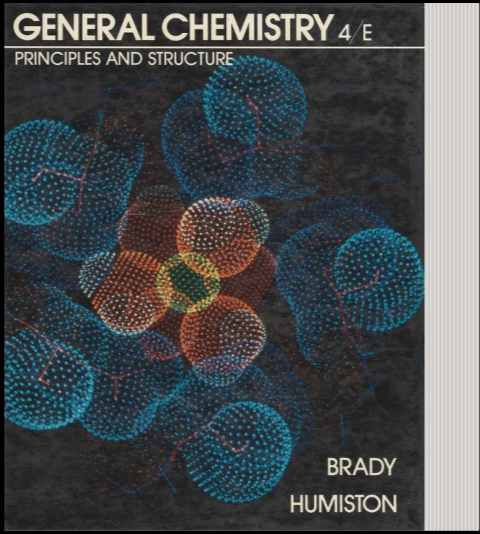 PDF
PDFEngineering Chemistry I
Suggested Project List minimum one project per student or group o students.
1. Construction of bio-reactor
2. Construction of Li-cell
3. Set-up for photolysis of water
4. Synthesis of bio-degradable polymers
5. Design concept based on circular economy
Any other suitable project suggested by mentor or students.


