Thursday, 1 August 2019

Chemistry (31110001)_Chemical AUGUST_2019

Syllabus

Academic Calendar GTU

LIST OF REFENCE BOOKS Click and Find PDF for all E BOOKS

10 Best Chemical Innovations

Some important link to understand the basics of chemistry....

INDIAN CHEMISTRY THROUGH THE AGESBY D.P. AGRAWAL

THE ORIGINS OF TODAY'S "CENTRAL SCIENCE"

Introduction to chemical sciences


CLICK Here for LAB Manual

Experiments to be performed
Sr. No.
Title
1
To determine melting point of given sample. LINK-1   LINK-2
2
To determine boiling point of given sample.  LINK-1   LINK-2
3
To determine hardness of given water sample. Link-1   Link-2
4
To determine the alkalinity in given water sample. Link -1   Link-2
5
To determine the amount of chloride content in given water sample using Mohr’s method.  Link 1(Residual Cl)   Link-2   Link - 3
6
To determine the moisture content in coal.   Link 1 LOD Method   Link-2
7
8
Determination of Saponification Value of Oil.  Link 1   Link-2 Link-3
9
Determination of Concentration of Unknown Solution Spectrophotometrically.    Link 1   Link-2  Link-3
10
Determination of available oxygen and manganese dioxide in pyrolusite ore by KMnO4
Assignments Click on Each Assignments for PDF
01-09-2019
16-09-2019
14-10-2019
30-11-2019
26-12-2019


Industrial Visit at VALSAD SUGAR Factory on 18-10-2019 By Dr. Bhadresh R. Sudani 

Industrial visit at Valsad Sugar Factory

Bagasse Observations 

Security Check 

ETP @ Valsad Sugar Factory

Wednesday, 19 June 2019

Applied Chemistry

Hello friends....

Hope you have done well in your last semester exams.....

It will be joyful again to work with you over the next semester in  Applied Chemistry (3130506). Get ready for a journey of a lifetime learning memories. In this class you will love to learn very interesting topics in this subject ....like : Properties and Chemical Constitutionof matter, Principle of Organic Reactions, Stereochemistry,  Thermo-chemistry, Analytical Techniques and many more things with some instrumental methods of analysis too. I promise  you that you will really enjoy to learn the subject. These will be useful to your shining carrier in the field of chemical engineering.

After learning this subject you will be able to....
 

---Identify and describe reactivity patterns in organic reaction.

---Explain theoretical principles underlying molecular structure, bonding and properties

---Describe the importance and relevance of Hard and soft materials and also their characterization, properties and uses in engineering applications.

---Distinguish the difference between the different orders of reaction and apply accordingly.

---Utilize different thermo-dynamical laws to explain course of reactions.

---Apply the different spectroscopic techniques to explain the inner &surface characteristic of molecules.   

List of Experiments: CLICK on The Name of Experiment You will find the video of that experiment.

Sr .no.
Name of experiment
Specific area    or
Related topic of  theory
No. of  experiment per area or branch of chemistry
Branch of chemistry
1

Thermo chemistry

Video Link
01
Physical Chemistry
2
Conductometry

Video Link
01`
Physical Chemistry
3
Spectrophoto metry
Video Link
01
Physical Chemistry
4

Light scattering

Video Link
01
Physical Chemistry
5
pHmetry, titration 
01
Physical Chemistry
6

Physical property(Unit 1)

Video Link
01
Physical Chemistry
7
Chemical kinetics
Video Link
01
Physical Chemistry

Ester Hydrolysis 2nd order reaction
Chemical kinetics
Video Link
01
Physical Chemistry
8

01
Physical Chemistry

Polarimeter.
Physical Organic chemistry
01
Physical Chemistry
09

10

Chemical Analysis

Video link Part-1
02
Inorganic  Chemistry
11

12
Chemical Analysis

Video link Part-2
02
Inorganic  Chemistry
13

14
Chemical Analysis
Video Link-1
Video Link-2
02
Organic chemistry
15

16
Chemical Analysis

Video Link-3
02
Organic chemistry
Total
        18

Note – Out of total 18 experiments minimum 8 to be performed in physical and 8 to be performed in inorganic/organic chemistry and it may vary with reagents and chemical available.           

Instructions and techniques for inorganic and organic analysis Click Here 


Click Here : For Inorganic Qualitative Analysis you can use the reference which you have used during your PUC levels.

Click Here: For Charts you can observe this link

Thursday, 3 January 2019

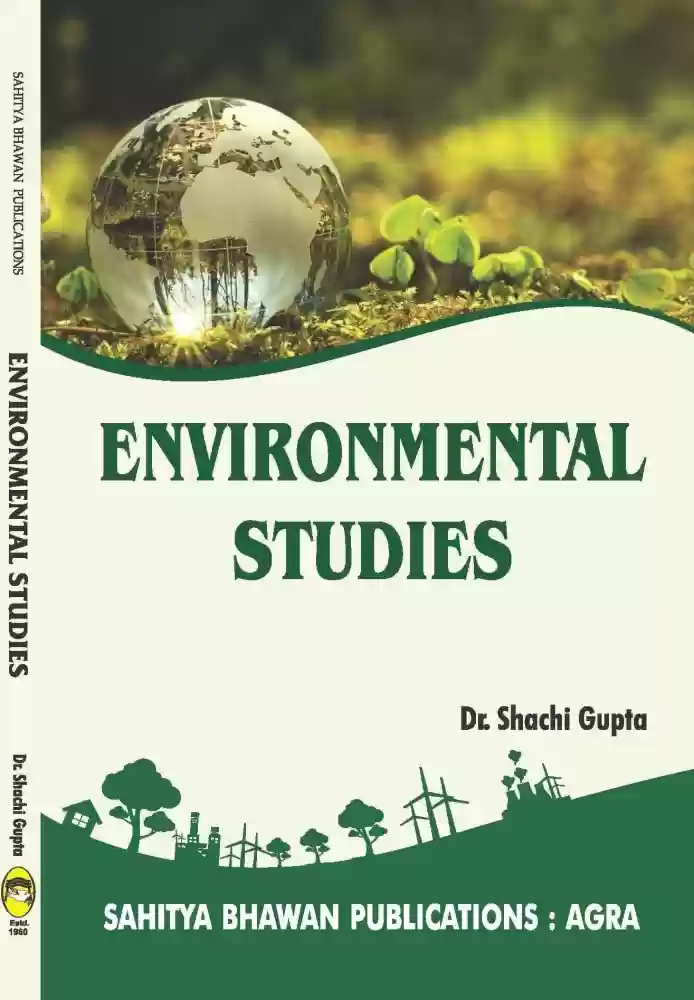
Environmental Studies 3110007

Chemistry _ 3110001 January-2019

Syllabus

Students List

Some important link to understand the basics of chemistry....

Indian Chemistry Through The Agesby D.P. Agrawal

The Origins of Today's "Central Science"

Introduction to chemical sciences


Experiments to be performed
Sr. No.
Title
1
To determine melting point of given sample. LINK-1    LINK-2
2
To determine boiling point of given sample.  LINK-1    LINK-2
3
To determine hardness of given water sample. Link-1    Link-2
4
To determine the alkalinity in given water sample. Link -1   Link-2
5
To determine the amount of chloride content in given water sample using Mohr’s method.  Link 1(Residual Cl)   Link-2   Link - 3
6
To determine the moisture content in coal.   Link 1 LOD Method   Link-2
7
Determination of Concentration of Unknown Solution Spectrophotometrically.    Link 1   Link-2  Link-3
8
Determination of Saponification Value of Oil.  Link 1   Link-2 Link-3
9
10
Study of decomposition reaction of ZnCO3 by Gravimetric analysis.
Link 1   Link-2
Assignments
1-03-2019
18-03-2019
18-04-2019
01-05-2019
19-05-2019